Roller Coaster Icons
A Quick First Impression
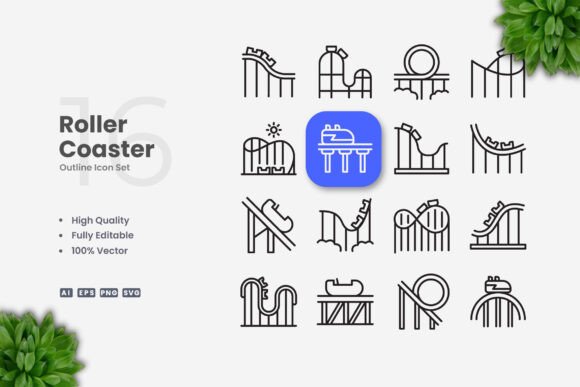
The first time I saw Roller Coaster Icons, I was immediately drawn to its clean, modern aesthetic. The design is minimal yet expressive, with a strong sense of motion that hints at the theme without being overwhelming. The icons are well-balanced in shape and proportion, making them feel both approachable and professional. This kind of visual language is perfect for a designer looking to add subtle character to a project without overcomplicating it.
When Would You Use Roller Coaster Icons?
Roller Coaster Icons are versatile enough to fit into a wide range of embroidery projects. They work especially well on custom apparel like sweatshirts, tote bags, and caps. Imagine adding one to a personalized gift like a baby onesie or a holiday embroidered pillow cover. Their simple shapes make them ideal for small hoop sizes, and their clean lines ensure they look sharp even when scaled down.
For a small shop product like an embroidered patch or a custom apron, these icons offer a great way to inject personality without sacrificing clarity. They’re also great for digital embroidery files that will be used in printable mockups or as design assets for Etsy listings and craft fair products.
Real-Life Embroidery Considerations
When I think about using Roller Coaster Icons in a real project, I consider how they’ll translate from screen to fabric. For instance, if I were creating a custom embroidered tote bag for a client, I’d want the icon to remain recognizable after stitching. The simplicity of the design helps here—it doesn’t have too many intricate details that could get lost in the process.
However, there are some situations where Roller Coaster Icons might not perform as well. On thin or stretchy fabrics, the design could lose some of its crispness. Similarly, on dark fabric, the contrast between thread color and background can affect visibility. It’s always a good idea to test the design on scrap fabric before committing to a finished product.
Stitching Clarity and Visual Appeal
One of the biggest advantages of Roller Coaster Icons is their stitch density. The design is structured in a way that allows for easy editing—resizing, changing color, or adjusting stroke weight—without compromising the overall integrity of the icon. This makes it a great choice for machine embroidery design that needs to be adaptable to different applications.
For handmade products, the clarity of the stitch pattern is crucial. A well-designed icon should look consistent whether it's stitched by hand or machine. Roller Coaster Icons maintain their visual appeal across various thread colors and stabilizer types, which is a big plus for a designer working on multiple projects.
Where to Be Careful
While Roller Coaster Icons are generally reliable, there are a few scenarios where extra care is needed. On curved surfaces like caps or pillow covers, the design may require adjustment to ensure it looks balanced. Additionally, areas with tiny lettering or densely packed stitches can be tricky to stitch cleanly, especially on textured fabrics.
If you're planning to use the design on a layered garment or something that will undergo frequent washing, it’s important to consider how the design will hold up over time. Testing on a printable mockup or black and white preview can help identify potential issues before finalizing the design.
Design Value and Customer Trust
From a craft business perspective, the quality of the design directly impacts customer trust. A well-executed embroidery file like Roller Coaster Icons can elevate a product from average to exceptional. It shows attention to detail and professionalism, which are key factors in building a loyal customer base.
For Etsy sellers or small shop owners, the ability to customize the design—whether through fill stitch, running stitch, or satin stitch—adds value to the product. It gives customers more options and increases the perceived worth of the item.
Practical Designer Notes
Before using Roller Coaster Icons in a commercial project, I recommend a few practical steps. Always test the design on scrap fabric to see how it performs. Check the hoop size and stabilizer compatibility to ensure a smooth stitching process. Also, verify that the design works well on both light and dark backgrounds, and don’t forget to review the license terms if you plan to sell the finished product or digital files.
Finally, consider how the design fits into your brand identity. If you’re creating a custom apparel line or a branding package, Roller Coaster Icons can serve as a consistent visual element that enhances recognition and professionalism.